
Explore North Georgia’s Stargazing & Night Sky Events 🌌✨
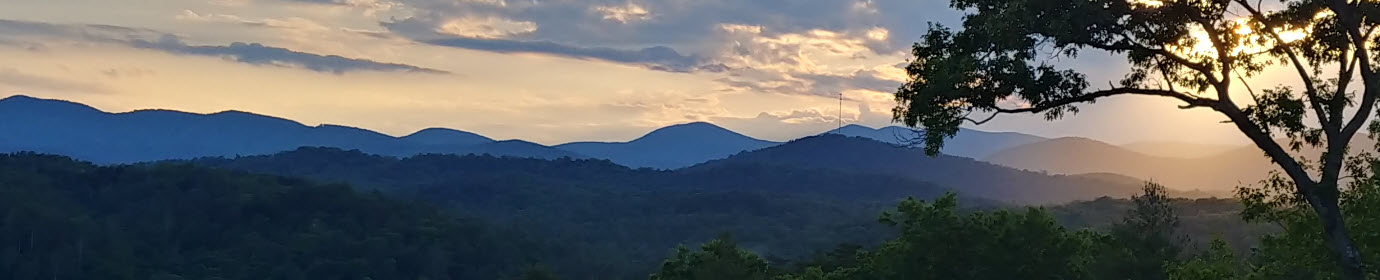
North Georgia offers not only scenic daytime attractions but also stunning night skies. While visiting the GA mountains, take time at night to look up and experience the beauty of the dark nighttime skies and marvel at the latest astronomical discoveries. 🌌
Stargazing in North Georgia
Quick Article Navigation:
North Georgia Night Sky Guide: Where, When, & How to Stargaze in the Mountains
North Georgia offers some of the darkest night skies in the Southeast, perfect for discovering the cosmos far from city lights. Whether you’re a seasoned stargazer or a curious beginner, this North GA guide walks you through where to go, when to observe, plus tools and resources to make the most of the incredible stargazing opportunities! ✨
Where to Stargaze in North Georgia
🗺️ The region offers an incredible variety of stargazing locations, from professional observatories to remote mountain peaks. Each spot provides unique advantages depending on your interests, skill level, and equipment.
Planetariums and Observatories in North GA
Explore the wonders of North Georgia’s skies with two premier locations that offer incredible telescope viewings alongside captivating planetarium shows. Plan your visit to catch these exciting programs on clear nights, blending high-tech celestial presentations with real-world star gazing through powerful telescopes. 🏢🔭
UNG Observatory and Coleman Planetarium
Coleman Planetarium, located at the University of North Georgia in Dahlonega, showcases immersive full-dome videos and live presentations that reflect the current night sky. 🪐 Enjoy FREE planetarium shows on most Fridays at 8:00 pm (approximately 40 minutes long). Note that although the shows are free, you should reserve space for your party with online Planetarium Registration.
 Planetarium Info Line: +1 (706) 864-1471
- 📍Address: UNG HNS Building, 159 Sunset Drive, Room 234, Dahlonega, GA
- 📍GPS Address: L35, Sunset Dr, Dahlonega, GA 30597
- Email: planetarium@ung.edu
- Coleman Planetarium Website: ung.edu/planetarium
 Planetarium Info Line: +1 (706) 864-1471
 Email:
  Coleman Planetarium Website:
 Following the Friday night shows at Coleman Planetarium, opt to take the short drive to the nearby observatory for telescope views of stars and planets.
The North Georgia Astronomical Observatory is located about 4 miles from the UNG Dahlonega campus. It features a 28″ reflecting telescope for viewing to promote astronomy education. 🔭 FREE public telescope viewings are on Friday nights from 8 pm to midnight at the observatory (weather permitting – check the Facebook page for nightly opening status).
- Observatory Phone: +1 (706) 867-2037
- Address: 82 Day Drive, Dahlonega, GA
- Email: observatory@ung.edu
- Website: ung.edu/observatory
- Facebook: North Georgia Astronomical Observatory has 5,700+ followers
 Address: 82 Day Drive, Dahlonega, GA
 Facebook:
YHC Observatory and Rollins Planetarium
Visit the O. Wayne Rollins Planetarium in the Maxwell Center at Young Harris College on selected Friday evenings for a live-narrated “seasonal stargazing” segment in addition to the featured full-dome program. This planetarium features a 40-foot-diameter dome and can seat 104 people for shows lasting about 45–60 minutes.
The Rollins Planetarium schedule is online, and advance tickets may be reserved/purchased via Eventbrite. Remaining tickets will be available for purchase at the door 30 minutes before showtime.
- Planetarium Phone: +1 (706) 379-5130
- 📍 Address: Rollins Planetarium, Dobbs McEachern Rd, Young Harris, GA
- Website: yhc.edu/community/planetarium
- 🎞️ Rollins Planetarium Tickets: eventbrite.com
The Young Harris College Astronomical Observatory is located about 1.5 miles from the main campus, at an elevation of over 2,000 feet on the flanks of Brasstown Bald. The YHC observatory features a 14-inch Schmidt-Cassegrain telescope for observing sessions. 🔭 In addition to the main scope, the facility also includes outdoor telescope piers that can mount a number of other telescopes.
🗺️ Maps to the YHC observatory are available at Rollins Planetarium on the YHC campus. Please note that parking is limited, an uphill walk is required, and no restrooms are available on-site. Watch online for open house nights with free admission for everyone!
Prime Stargazing Locations in North Georgia
North Georgia offers some of the best dark sky locations in the Southeast, perfect for witnessing breathtaking celestial views away from city lights. Whether you seek a convenient scenic overlook or enjoy hiking to more remote summits, these prime spots set the stage for unforgettable nights under the stars. 🌠🌄
- Brasstown Bald (4,784′) is Georgia’s highest peak, and the visitor parking lot provides easy automobile access 🚗 to secluded night sky views (visitors may also take the steep 0.6-mile hike to the summit for panoramic views)✨
- Carter’s Lake Astronomy Field is a public park with a dedicated area to viewing the dark skies between evening and morning nautical twilight. Bring your own gear, or check social media for special events hosted by local astronomy groups.
- Chattooga Wild and Scenic River offers remote spots with minimal light pollution for stargazing along the natural river 🌠
- Cohutta Wilderness is well known for its dark skies, ideal for overnight stargazing camping trips 🏕️
- Hogpen Gap is about a 20-minute drive from Helen and features a North-facing scenic overlook for viewing the starry skies 🌟
- Popcorn Overlook is 15 miles from Clayton and a recognized dark sky location for stargazing and astronomy activities 🌌
- Rabun Bald (4,696′) offers dark skies and broad horizons but requires a 3-mile hike to the summit. The effort is rewarded with one of the clearest night skies in the state, surrounded by national forest land with minimal light pollution.
Lodging for Stargazers: Sleep Under Pristine Skies
When planning your North Georgia stargazing adventure, consider lodging options that encourage night sky viewing. ✨ Many rental cabins and mountain homes are located in areas with minimal light pollution and offer amenities such as telescopes or outdoor decks ideal for night viewing. Staying in these accommodations lets you enjoy the star-studded skies whenever you want, right from your doorstep.
Secluded Mountaintop Getaway with Big Skies and a Telescope
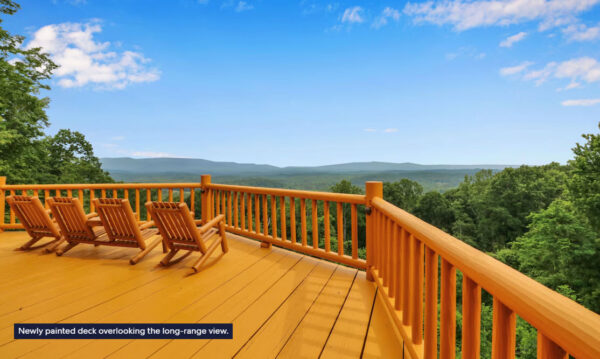
Secluded Cabin with Big Sky Views and Telescope [photo VRBO]
This gorgeous mountain cabin nestled near Blue Ridge includes a telescope 🔭 for guest use, offering inspired views of the stars, planets, and even the Milky Way on clear nights. Cozy up to the fire pit after a day of exploring and step outside for uninterrupted celestial shows from one of the best dark sky neighborhoods in North Georgia. 🌌
- Spacious 2,800 square foot cabin that sleeps 10 in 3 bedrooms and 3 bathrooms
- Click here to check rates and availability, and start planning your skywatching stay
Cabin with Telescope and Sweeping Views near Blue Ridge
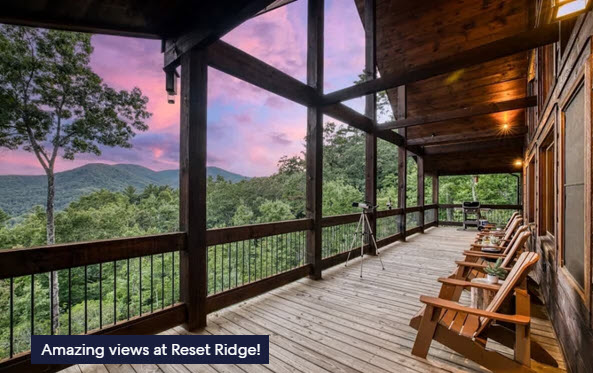
Blue Ridge area cabin with Telescope, Game Room, + more [photo VRBO]
- Roomy 2,700 square foot cabin that sleeps 8 in 3 bedrooms and 3 bathrooms
- Click here to check rates and availability, and book your stargazing vacay
Aska Stargazer Cabin near Blue Ridge with Telescope
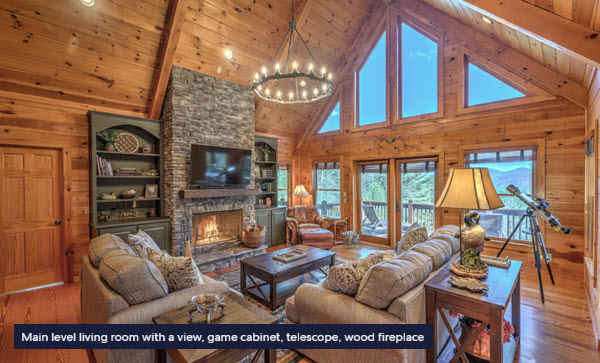
Aska Stargazer Cabin near Blue Ridge with Telescope [photo VRBO]
- Charming 2,900 square foot cabin that sleeps 8 in 3 bedrooms and 2+ bathrooms
- Click here to check rates and availability, and book your mountain getaway
When to View Night Skies in North Georgia
Plan your North Georgia nights by discovering the best times and special celestial events to experience. From guided state park programs to meteor showers, eclipses, and exciting satellite flyovers, this section helps you time your stargazing adventures for maximum wonder. 🌟
Night Events at North Georgia State Parks
Take advantage of the unique Night Events at Georgia State Parks throughout the year, including these nighttime events in North Georgia’s state parks. ✨🎉 View the online event calendars for each park for more details.
- Full Moon Hikes at Tallulah Gorge State Park – take a guided hike bathed in full moonlight at Tallulah Gorge State Park and experience a magical perspective of the natural gorge illuminated by the moon.
- Glow for a Hike at Fort Mountain State Park – all ages are welcome for this easy, one-mile hike 🚶♀️ around the lake to enjoy glowing games, look for bioluminescent bugs with blacklights (loaners are provided), and receive a free glowstick! Bright clothes, light-up shoes, and other glow-in-the-dark gear are encouraged!
- State Park After Dark at Unicoi State Park – enjoy seasonal guided moonlit hikes (March through November) and explore the park by moonlight 🌙
Viewing Celestial Phenomena in North Georgia
Every year, the North Georgia mountains put on a spectacular show above the treetops! From meteor showers to eclipses, here’s what to look for and links to stay updated each year. 🌠🗓️
Major Meteor Showers to Watch
Catch shooting stars during the year’s biggest meteor showers, best viewed under North Georgia’s clear, dark skies. For a current meteor shower calendar and updates, check the American Meteor Society each year for peak dates and times.
- Quadrantids: early January (known for intense, bright meteors)
- Lyrids: mid-to-late April
- Perseids: mid-August (up to 100 meteors/hour)
- Orionids: late October
- Geminids: mid-December
Celestial Events & Eclipses in North Georgia
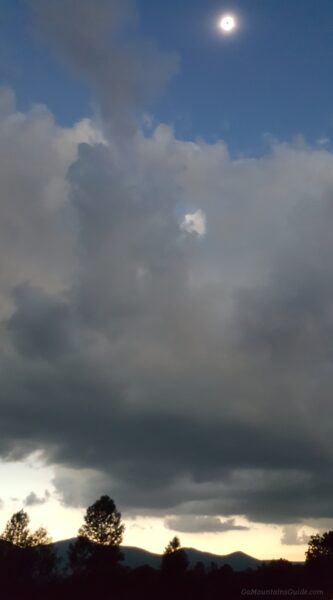
Total Solar Eclipse in Blairsville Georgia in 2017
🌘 The night sky in North Georgia always offers exciting surprises, from dazzling meteor showers to rarely observed comets like the recently discovered 3i ATLAS. While another 🌞 total solar eclipse (like the 2017 one in Blairsville pictured above) isn’t expected in the area soon, total and partial lunar eclipses regularly grace the skies. For updated details on eclipses, meteor showers, comets, and other spectacular astronomical events, check out resources like Time and Date’s Astronomy Tools. 🌟
Space Station and Satellite Crossings
🚀✨ In addition to the very distant celestial phenomena, the dark North Georgia night skies are also excellent places to view orbiting man-made objects much closer to home. This often requires no special equipment, just knowing when and when to look!
- Starlink Satellite Crossings – this bright, moving string may be visible for several minutes, often shortly after dusk or before dawn. Predict exact viewing times for your location with Find Starlink.
- International Space Station (ISS) Passes – The International Space Station regularly orbits Earth and can be seen flying overhead in North Georgia as a bright, fast-moving object across the sky. It is visible shortly after sunset or before sunrise when sunlight reflects off its solar panels. Track exact times and directions for ISS flyovers in your area using apps like Heavens-Above or websites such as Spot The Station.🚀🌍
Local Stargazing Events
Watch for local stargazing events run by local colleges, parks, and astronomy clubs. 🔭👥 Events include popular seasonal events such as the Atlanta Astronomy Club “Gazers of the Galaxy,” held after dark at Brasstown Bald with expert astronomers and high-powered telescopes.
Tools and Resources for Dark Sky Adventurers
📱✨ Prepare for your stargazing adventure with the right gear, apps, and educational resources.
Stargazing Gear and Tech Essentials
To truly enjoy North Georgia’s stellar skies, having the right equipment and digital aids can elevate your experience. From beginner-friendly telescopes to powerful smartphone apps, here’s what you need to bring the cosmos closer.
Stargazing Apps
📱 Turn your phone into an interactive guide to the night sky, helping you track satellites, find dark stargazing spots, and identify stars and constellations with ease.
- Heavens-Above (android / web) see detailed satellite tracking and celestial predictions
- Light Pollution Map – Dark Sky (android / apple) locates the darkest areas nearby for the best stargazing conditions
- Stellarium (android / apple / web) showcases the night sky in real time for easy identification of stars and constellations
- Sky Tonight (android / apple) features a calendar of celestial events, lunar phases, meteor showers, eclipses, and a stargazing index
- SkyView (android / apple) lets you identify planets and stars simply by pointing your phone
Interactive Astronomical Tools & Calendars
Use these online astronomical tools 🌐to plan your stargazing sessions with current information on sky conditions, celestial events, satellite passes, and guides tailored to your location.
- Clear Dark Sky – Check local cloud conditions, atmospheric transparency, and light pollution maps for stargazing sites
- NASA Sky Events Calendar (SKYCAL) – Generate a custom printable calendar showing moon phases, eclipses, meteor showers, and planetary events for any month or year
- Sky & Telescope Interactive Tools
- Astronomical almanac with sunrise/sunset and twilight times
- ISS and Hubble Space Telescope transit times
- Interactive sky charts for your location + more!
Stargazing Gear
Discover the essential gear for anyone eager to explore the night skies in North Georgia. 🔭
- Binoculars – get a closer view, with or without a tripod
- Vortex Options Diamondback 10×50 can spot constellations and planets, and are more comfortable for quick stargazing
- Celestron SkyMaster 20×80 offers wider-field views, great for scanning the Milky Way
- Telescopes – see things much more closely with a telescope mounted on a stabilized tripod
- Celestron FirstScope is a great entry-level reflector telescope offering portability and ease of use
- Celestron NexStar 6SE is a popular computerized step-up
- Red flashlights preserve night vision while reading star maps
- Reclining loungers provide neck support to make long observations much more cozy

- Warm blankets and clothing are essentials for outdoor stargazing on cool mountain nights
- Glow-in-the-Dark Star Finder Map with a seasonal guide to the stars and planets
Learn More with Free Astronomy Courses
Bring the night skies to life by learning more with FREE online astronomy courses at some of the world’s top universities! 📚
- MIT OpenCourseWare: free courses, including Introduction to Astronomy and advanced astrophysics courses from MIT are available for everyone online
- Yale University Open Courses: explore rapidly advancing areas of astronomy in Frontiers and Controversies in Astrophysics, which covers black holes, exoplanets, and dark energy
- Open University: take courses on the solar system, telescope observing techniques, & more
FAQs About Dark Skies in North Georgia
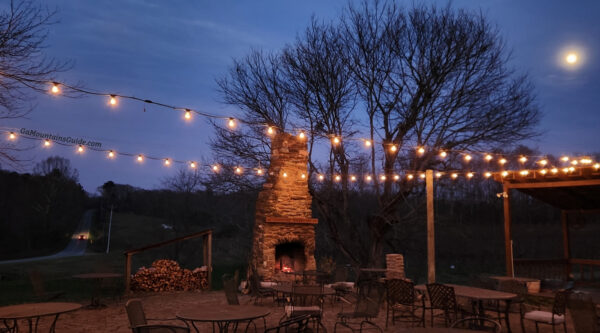
Moon Rising over Vines at Cartecay Vineyards in Ellijay GA in Nov 2023
🌌 Curious about exploring North Georgia’s dark skies? 🌟 Reach for the stars confidently with answers to common questions.
- When is the best time to stargaze? While full moon hikes provide enchanting nighttime illumination, the clear, moonless nights (especially during new moon phases) offer the darkest skies
- What should I bring? Warm clothes, blankets, camping chairs, snacks, a red flashlight, and binoculars or a telescope if you have one
- Are there guided tours or beginner events? Yes, many observatories and parks host educational programs, star parties, and night hikes perfect for all ages
- Can I bring my pet to night hikes? It depends on the park and specific event rules (always check beforehand for pet policies)
***
Thank you for saving and sharing this article!
North GA Stargazing
Learn more about North Georgia’s scenic natural beauty:
North Georgia is not just about stunning daytime scenery. It also offers some of the darkest night skies in the Southeast, making it perfect for stargazing far from city lights. What is your favorite thing about the night skies in North Georgia?


What a wonderful North Georgia stargazing guide! As someone who loves escaping city lights, this night sky article is a goldmine of ideas. I’ve been to Tallulah Gorge during the day but never considered it for stargazing, so that’s now on my list for a future trip. Your tip about using a red light headlamp is a small detail that makes a huge difference in preserving night vision and enjoying the stars longer. Thanks for compiling such an inspiring and useful resource for exploring North Georgia’s dark skies. It makes me want to plan a mountain trip immediately!
Thank you so much for the kind words and for taking the time to share this. It is great to hear that the North Georgia stargazing guide helped plan your next trip to the mountains.
Tallulah Gorge is already stunning during the day, and on a calm, dark night, it becomes a beautiful place to slow down and enjoy the night sky in a new way. If you go, try to plan around a new moon or a meteor shower for an even more impressive view of the stars. Last weekend (during the Geminds) we even saw a shooting star from our car!
That red light headlamp tip is one of those small gear choices that really pays off, both for your own night vision and for anyone stargazing nearby. Hope you have a fantastic visit when you make it back up to explore more of North Georgia’s night skies.
This is a wonderful guide to stargazing in North Georgia — I love how it combines practical pointers (when and where to go, what gear to bring) with a variety of viewing options, from observatories and planetariums to remote mountain overlooks and wilderness spots. I especially appreciate the recommendations for places like Brasstown Bald and Cohutta Wilderness that offer dark-sky settings ideal for seeing stars, meteor showers or even the Milky Way. The list of planetariums and public telescope sessions makes it very accessible for beginners, too.
Do you by any chance know which months tend to be clearest for viewing from mountain-top spots — to maximise chances of seeing meteor showers or the Milky Way?
Thanks so much, love hearing that! For the clearest mountain-top views in North Georgia, like Brasstown Bald or Cohutta, aim for late fall through winter (October-February). Cooler months bring drier air and fewer clouds, meaning sharper views plus prime meteor showers like the Geminids in December!